Anatomy of a Faith Crash: The Shrine of Velluna and the Miracle That Went Viral for All the Wrong Reasons

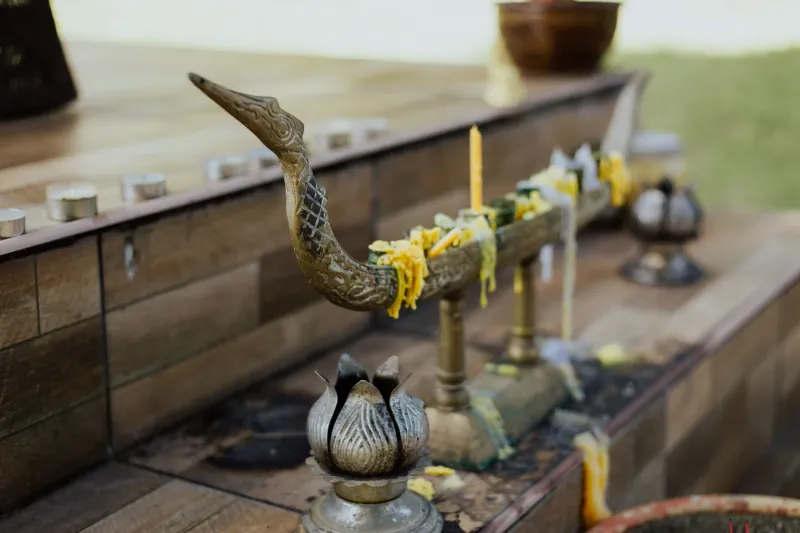
Photo: TJBlackwell, CC BY-SA 3.0, via Wikimedia Commons
Every pantheon has its blue chips. The sun god with the mega-temple in every major city. The war deity whose sigil shows up on half the shields at any given tavern brawl. And then there's Velluna — a modest harvest-and-hearth goddess who, until about eighteen months ago, was quietly crushing it in the mid-tier divine market across three river valleys and one very loyal farming county.
Then came the Wetherby Incident. And if you've ever wondered how fast a deity's stock can crater, buckle up. This one's a masterclass.
The Miracle That Launched a Thousand Rumors
Here's the short version, for those who've been living under a curse-free rock. Velluna's shrine in the town of Wetherby's Crossing had a modest but devoted congregation — call it a B-minus deity with an A-plus local following. Her priests ran a blessing stall every market day. Solid product. Reliable turnaround. Four stars, easy.
Then a traveling merchant with a grudge — and, as it turned out, an undiagnosed case of lycanthropy the shrine's healing rite accidentally accelerated — walked out of a blessing with a full moon problem and a big mouth. Within a week, the story had mutated into "Velluna's priests turn pilgrims into beasts," which is honestly a much better headline than the truth. Within a month, it was being sung in taverns two kingdoms over, because nothing travels faster than a bad miracle story set to a catchy chorus.
Shrine attendance dropped 60% in a single season. Tithe revenue collapsed. Two of Velluna's three priests took their talents to a neighboring hearth deity with better brand protection. Classic run on the bank.
Faith Is a Marketplace, Whether the Gods Like It or Not
Here's the uncomfortable lore truth: divine power in most settings runs on belief, and belief behaves suspiciously like consumer confidence. A deity's effective strength — spell access, domain potency, ability to manifest — correlates with active worshipper count, and worshipper count is driven by perceived reliability. Word of mouth. Reviews, if you will.
Velluna's problem wasn't the cursed miracle itself. Miracles go sideways all the time; any level 5 cleric has a story. Her problem was that she had no crisis response. No public miracle to counter the narrative. No celebrity endorsement. No counter-rumor campaign. She went quiet, and in the attention economy of the divine, silence reads as guilt.
Contrast that with the war gods, who survived centuries of atrocities partly because they leaned in. Bad press is only fatal if your brand promise doesn't include collateral damage. Velluna's brand promise was safety and hearth-warmth. One werewolf, and the whole value proposition was toast.
The Recovery Playbook (And Why It Worked)
What saved her, ultimately, was a move straight out of the mortal PR handbook: radical transparency plus a redemption arc. Velluna's remaining head priest published an open account of the Wetherby Incident — the grudge, the misdiagnosis, the accidental acceleration — and the goddess herself began quietly blessing werewolf-adjacent communities, positioning herself as the patron of those cursed through no fault of their own.
It's too early to call it a full recovery, but shrine attendance is up 30% year over year, and the rebrand has attracted an entirely new demographic. Sometimes the pivot finds you.
Why Your Table Should Care
Beyond the fun of divine economics, there's a genuinely useful worldbuilding lever here. If your campaign features gods who run on belief, then reputation management is canon, and it creates incredible plot hooks. A party hired to spread (or suppress) rumors on behalf of a struggling deity. A rival temple running a smear campaign. A paladin wrestling with the discovery that their patron's miracle backlog is a marketing problem, not a faith problem.
And for players? It's a reminder that your cleric's relationship with their god isn't a static backstory element. It's a live account with a balance that can go negative. Choose your deity like you'd choose a bank: check the reviews, read the fine print, and keep an eye on the news — because one bad week in a town you've never heard of can ripple all the way up to your spell slots.
Velluna, for what it's worth, has reportedly started responding to shrine feedback personally. Small gods learn fast when the market turns.