Thresholds, Altars, and Locked Doors: Reading a Temple Like a Character Sheet
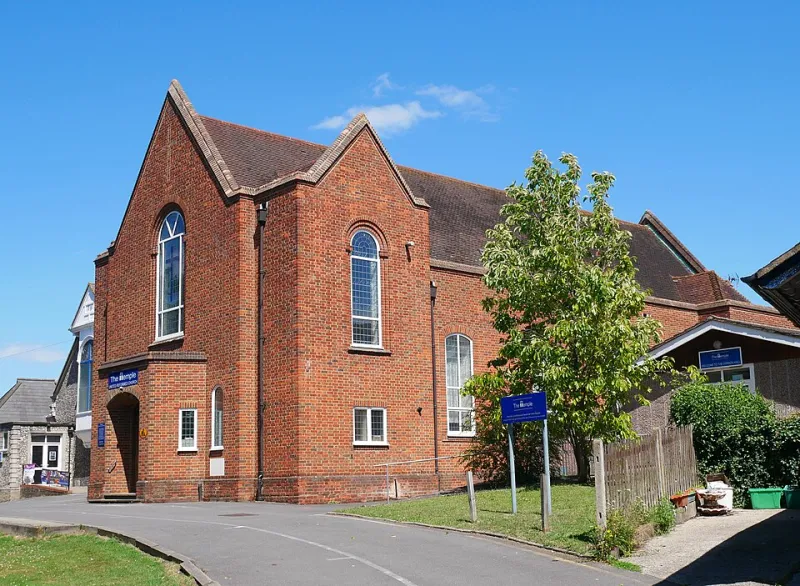
Photo: Ethan Doyle White, CC BY-SA 4.0, via Wikimedia Commons
In most campaigns, a temple gets one sentence of description: a grand temple of the sun, incense, chanting, moving on. That's a wasted room. Architecture is the cheapest characterization in worldbuilding, because players read space instinctively. They know what a locked inner door means. They know what a wide gate and a shallow step mean. They know what it means when the altar is behind a screen.
Design a temple well and your party can guess the god's domains before you name them — and learn something about the god's fears, budget, and congregation while they're at it. Read a temple well and the DM can hand you a faction, a history, and a heist target in a hallway.
A Building Can Be a Character Sheet
Think of the temple as a character sheet with columns instead of stats. Threshold: who's welcome. Altar: where power sits. Offering area: how money moves. Seating: who speaks and who listens. Security: what this faith expects people to try. Wear and repair: what they've survived and what they're still paying for.
Once you have those six, you don't need a paragraph of lore. You need a door.
Start at the Threshold
The entrance tells you everything about the congregation a god expects.
- A wide gate, a shallow step, no gatekeeper — a faith that wants crowds and counts bodies.
- Seven steps and a narrow door — hierarchy, initiation, a faith that makes you arrive out of breath.
- A door facing away from the market — mystery, privacy, or a deliberate refusal to compete for foot traffic.
- A door that's barred during business hours — a faith under threat, or one that only opens for the right people.
Then check the small stuff. Do worshippers remove their shoes? Leave weapons in a rack by the door, or carry them inside? Is there a basin, a bell, a rope to pull? Thresholds are where a faith states its terms, and players will remember the terms if you show them once.
The Altar Doesn't Have to Face the Congregation
Altar placement is a statement about power, and there are more options than most DMs use.
- Altar at the far end, facing the doors — the god watches you come in. Authority is centralized and visibly judgmental.
- Altar in the center of the room — the god is among the people, ceremony is communal, and there is no safe back row.
- Sunken altar — the god is below and owed. Offerings go down, not up.
- Altar behind a screen or curtain — the god is not for you. The officiant is the only one who sees.
- No altar at all — the ritual is movement, dance, procession, or the whole building.
Also measure distance. A god whose altar is forty feet from the nearest worshipper is a god kept at arm's length, whether that's reverence or resentment.
Follow the Money: Offering Rooms and Storage
Where a temple puts its collection plate is a personality test.
A slot in the wall near the exit is quiet, transactional, and slightly ashamed — small gifts, impulse charity, anonymity. A room off the main hall with a clerk and a ledger is a faith that keeps records and issues receipts. A strongroom behind the sanctuary, guarded, with a priest who has to be summoned, is a faith that expects large gifts and knows exactly who gives them.
Look at the doors around it, too. Counting rooms, storage for grain and oil, vestments closets, a dormitory for clergy. A temple with a big offering area and a tiny sleeping wing is a temple that pays its staff badly, which is its own plot hook.
Seating Is Theology
Rows of benches facing one speaker mean a sermon tradition: one voice, a passive congregation, a religion of listening. An open floor with no seats means participation, and usually dancing, sacrifice, or both. Standing room only means a faith that's growing faster than it can build — or one with no money at all. Small private chapels off the main hall mean a donor class, and a donor class means names on the wall, and names on the wall mean politics.
If you only have time to describe one thing in a temple, describe where people sit and what that says about who gets to talk.
Security, or What This God Is Afraid Of
Security is a threat model, and every faith has one. Iron bands on the inner sanctum door. Two guards who are clearly bored. A lock on the offering chest but not on the relic case. A warding mark scratched over the lintel. Or nothing at all — a shrine with no lock and no guard, because the whole neighborhood would riot if anything went missing.
The unlocked door and the triple-locked door tell the same kind of story, just about different gods. Ask what would have to happen for this institution to install its first lock, and you've found a piece of its history.
Wear and Repair: The Building's Tell
Notice what's new. Fresh paint on an old wall, a repaired roof, a fresco that's brighter than the one beside it. Notice what's faded. A temple that has been patching the east wall for a decade is a temple with a budget problem and probably a campaign about it. The newest object in the room is the thing the faith is currently proud of. The oldest is what it can't afford to replace.
The Investigator's Checklist
When your party walks into a temple and you need details fast, run this list:
- What's the threshold — steps, doors, shoes, weapons, gatekeepers?
- What do you smell first, and where does the smell come from?
- Which way does the altar face, and how far is it from the nearest person?
- Where do offerings go, and who's watching them?
- Where does the congregation sit, stand, or kneel?
- Which doors are locked, and who holds the keys?
- Who in this room is armed, and who's pretending not to be?
- Can you see the street from inside? Can the street see in?
- What's the newest thing here? What's the oldest?
Nine questions, thirty seconds, and a room your players will draw maps of.
Build One Backwards
Designing instead of investigating? Start with the god's fear and work outward. A god of safe passage fears the closed door, so the temple is built as a gate you must walk through — no seats, no curtains, offerings of road dust, and an entrance that never actually closes. A god of secrets fears the window, so the building has almost none. A god of debts fears the debtor who leaves town, so the doors face inward, toward the road.
Write the fear first. The floor plan will follow, and your players will read it without being told.