Waiver-Wire Worship: Building a Party Patron Board That Actually Wins

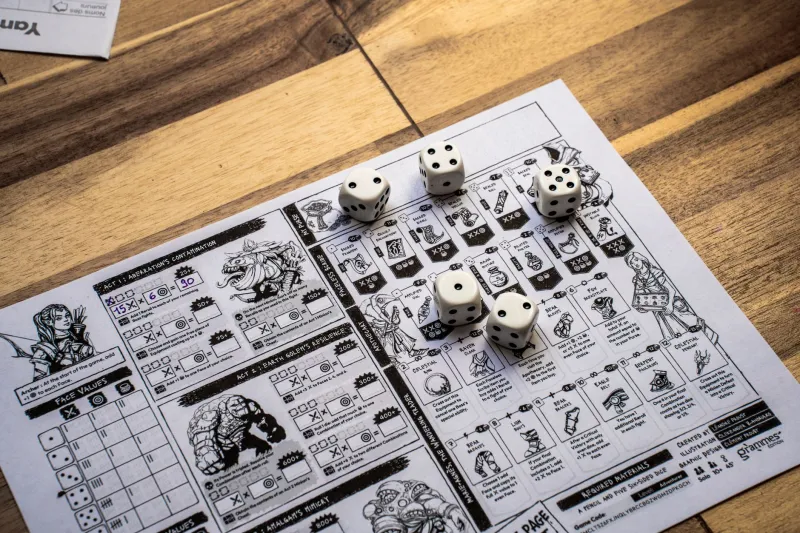
Photo: friends drafting fantasy football style board with sticky notes on tabletop game night, via observer.com
Every table picks its gods eventually. Usually it happens in a group chat at eleven at night: one player claims the dawn goddess because dawn sounds nice, another grabs the trickster because tricksters are funny, and the DM quietly spends the next eight months writing around the gaps. Nobody calls that a draft. It is one, though — just without a board, a clock, or any shared idea of what the party was actually trying to build.
Fantasy football fixed this exact problem years ago. Eleven people want good players, so they set scoring, rank the pool, take turns, and then live with the roster they built. Your pantheon can run the same way. Not because worship is a competition, but because a party whose patrons overlap, complement, and occasionally despise each other generates story without the DM doing all the heavy lifting.
Set Your Scoring Before Anyone Claims a God
A league that argues about scoring after the draft is a league that fights all season. Same at the table. Spend ten minutes agreeing on what your campaign actually rewards, then rank patrons against that list. Four categories cover most groups:
- Coverage — healing, condition removal, and somebody who can talk to a duke without starting a war.
- Exploration — travel, wilderness survival, and finding things that were hidden on purpose.
- Downtime — what your patron does for you between adventures, which is where most campaigns quietly live.
- Hooks — how often this god hands the DM a plot grenade.
A deity who scores high in hooks and low in coverage is a great second pick and a miserable first one. Write the categories down anyway. Half the value is watching your table realize they disagree about what a good campaign looks like.
Tier the Gods by Party Role
Draft boards work because nobody argues about a player's value in the abstract — they argue about it relative to everyone else available. Do the same. Sort every god into a tier, then note the job they'd do on your specific team.
| Tier | Party job | Draft-day read | Sample patron |
|---|---|---|---|
| Anchor | Keeps everyone breathing | Take one early, don't overthink it | Marrow-of-the-Hearth (hearth, healing, hospitality) |
| Flex | Two domains and no ego | Best value in nearly every draft | Sereth the Ledger (contracts, roads, trade) |
| Specialist | Narrow, loud, unforgettable | One is a signature. Three is a bit. | Old Tallow (funerals, candles, last words) |
| Boom/bust | Enormous ceiling, strange table rules | Only with a DM who loves chaos | Nim of Small Debts (luck, leverage, pettiness) |
| Handcuff | Insurance for your anchor | Cheap peace of mind | Vael the Ninth Hour (dusk, mercy, second chances) |
Notice what's missing from that board: a god of generic victory. Every draft has one player who wants to be unstoppable, and every pantheon has a deity who promises exactly that and hands the table nothing to roleplay. Rank it low and let somebody else reach.
Sleepers, Busts, and the Rookie Pool
A sleeper is a minor god with one specific, usable power — the shrine at the crossroads that will absolutely haul the party out of a bad night in a strange town. Sleepers win campaigns, and they're cheap, because nobody else at the table read that far down the list.
A bust is a god with a beautiful temple and a thin portfolio. Big congregation, gorgeous vestments, and every conversation with them circles the same single idea. Great for a one-shot. Exhausting across a year.
Then there's the rookie pool: deities invented at your own table. An unclaimed, unpublished god costs nothing, belongs to your group, and gives the DM a free blank spot on the map to fill in later. If your table likes homebrew, treat the rookie pool as the deepest part of the board and go shopping.
Stacking Is Real, and So Is the Ceiling
In fantasy leagues, stacking means rostering two players from the same offense so a big game pays you twice. At the table, stacking means two party members serving the same patron. It's efficient — shared scenes, shared obligations, one temple the whole party already knows how to navigate — and it comes with a ceiling. When every problem routes through the same god, every solution starts looking the same. Two worshippers in one party is a stack. Three is a monoculture.
Put the Holy Days on the Calendar
Bye weeks are the least glamorous part of drafting and the part that saves seasons. Every faith has days that belong to it: solstice obligations, tithe weeks, the annual closing of the shrine, the night the priests don't answer the door no matter who's bleeding. Map those before session three, put them on the shared calendar, and let the party plan around them the way a real league plans around a bye. A cleric whose temple goes dark for three days in high summer is a cleric with a story problem, and story problems are the product you're actually buying.
The Waiver Wire: Swapping Patrons Mid-Campaign
Here's where league rules start earning their keep. Decide now what a patron change costs — a quest, a public penance, a season of silence from the old god — so nobody has to negotiate it mid-session while the DM is holding four stat blocks and a hostage situation. Cheap swaps turn patrons into costume changes. Expensive swaps turn them into decisions.
A Sample Board
Four players, one DM, a twelve-god pool. The paladin opens with Marrow-of-the-Hearth as the anchor. The cleric, seeing healing is covered, flexes to Sereth the Ledger and picks up travel, contracts, and a standing reason to talk to merchants. The rogue goes specialist with Nim of Small Debts and instantly becomes the party's luck engine. The bard looks at the board, notices an unclaimed seat, and takes the rookie — a local river god the DM invented twenty minutes ago. Round four is usually where tables have the most fun, because the boring jobs are covered and everyone is drafting for flavor with a plan underneath it.
The Only Rule That Beats Every Ranking
A player who is excited about their god will outdraft a player who optimized theirs. Rankings are scaffolding: they stop the party from tripling up on healers and forgetting that somebody has to talk to the magistrate. Once the board is built, draft for enthusiasm.
Then, like any good league, argue about it next season.